
Understanding the Landscape of Car Accident Statistics in Louisiana
Driving in Louisiana can be dangerous, and the numbers don’t lie. According to LSU’s Center for Analytics & Research in Transportation Safety (CARTS), a car crash resulting in injuries occurs every 15 minutes in the state. That means before you finish your next meal, someone has likely been hurt in an accident somewhere in Louisiana. Even more concerning is the fact that a fatal crash happens roughly every 12 to 13 hours, which means there are two lives lost on Louisiana roads nearly every day. These sobering statistics reflect the inherent risks on our state’s roads, but they also serve as a call to action for drivers. Understanding these numbers helps put into perspective just how critical it is to adopt safer driving habits. Most of us drive almost every day, whether it’s for work, errands, or leisure, but we often take for granted just how quickly things can go wrong. While drunk driving continues to be a leading cause of fatalities, other factors such as distracted driving, speeding, and a lack of seat belt use also contribute to the high accident rate. In this article, we’re going to explore Louisiana’s car accident statistics in greater detail. We’ll examine the key causes of these crashes, provide actionable prevention tips, and give you a clear understanding of what steps to take to stay safe on the road. Whether you’ve lived in Louisiana your whole life or you’re new to the state, this information is essential for every driver. The statistics are sobering, but by taking the right precautions, you can dramatically reduce your risk of becoming one of them.The Reality of Car Accidents in Louisiana
Let’s start with the cold, hard facts. Based on data from LSU’s CARTS report, nearly 800 people lost their lives in motor vehicle accidents in Louisiana in 2022. That number includes everyone—drivers, passengers, pedestrians, and cyclists. When you break it down, that’s more than two fatalities every single day of the year. This isn’t just a statistic; it’s a tragedy that affects families, communities, and the entire state. To give you some context, Louisiana’s rate of 21 deaths per 100,000 people is well above the national average of 12.9 deaths per 100,000 people. This puts our state among the most dangerous in the country when it comes to driving. While these numbers are alarming, they also provide us with valuable insight into what’s going wrong on our roads. It’s not just about bad luck or being in the wrong place at the wrong time—there are specific behaviors and conditions that make Louisiana’s roads particularly hazardous. One major issue is the prevalence of drunk driving. Despite numerous campaigns to raise awareness about the dangers of driving under the influence, Louisiana consistently ranks among the worst states for alcohol-related crashes. It’s a problem that cuts across all age groups and demographics, but it’s especially prevalent among younger drivers and those who frequently travel rural roads, where police presence is less concentrated. The statistics also show that many of these accidents could have been prevented with more attention to road safety. Whether it’s using a seat belt, slowing down, or putting away distractions, small changes in behavior can have a huge impact on the number of accidents we see each year. As a driver in Louisiana, understanding these risks and adopting safer habits could be the difference between life and death.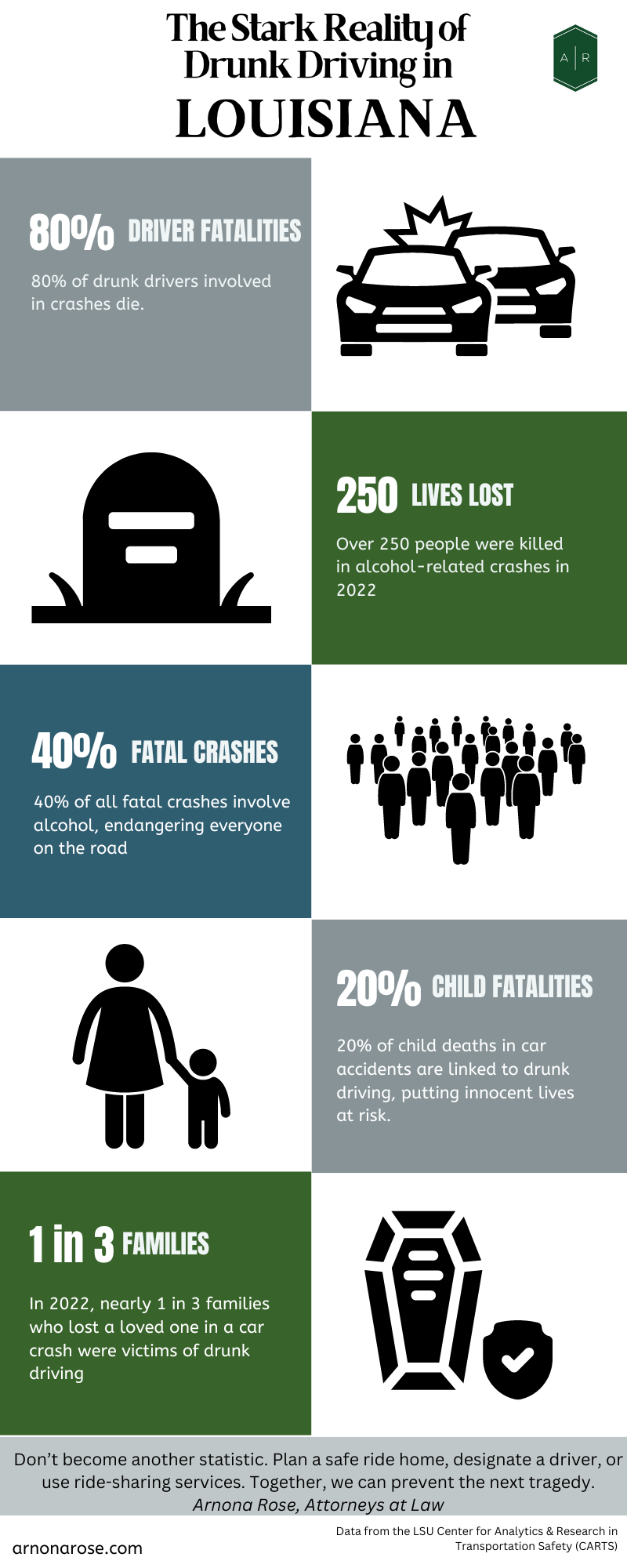
Drunk Driving – A Leading Cause of Fatal Crashes
One of the most sobering realities about driving in Louisiana is the prevalence of drunk driving. We’ve all seen the billboards, TV ads, and public service announcements urging drivers not to drink and drive, but despite these efforts, drunk driving remains a leading cause of fatal crashes in our state. According to LSU’s CARTS report, over 80% of drunk drivers involved in accidents die in the collision. That’s a staggering number, and it should serve as a wake-up call to anyone who thinks they can have a few drinks and still drive safely. What makes drunk driving so dangerous? For starters, alcohol impairs your ability to react quickly to changing road conditions. Whether it’s a car braking suddenly in front of you, a pedestrian stepping into the crosswalk, or an unexpected curve in the road, alcohol slows your reaction times and clouds your judgment. Even at low levels of intoxication, your ability to make quick decisions and take evasive action is compromised. At higher levels, the effects of alcohol become even more pronounced, making it almost impossible to drive safely. Louisiana’s roads pose additional challenges for impaired drivers. Long stretches of rural highways, with few streetlights and limited traffic enforcement, can create a false sense of security for drivers who think they’re “just fine” after a few drinks. But these conditions are exactly what make drunk driving so deadly. At night, visibility is reduced, and reaction times are even more critical. A single mistake—like drifting over the center line or failing to brake in time—can have fatal consequences. To make matters worse, drunk driving doesn’t just endanger the person behind the wheel. It puts everyone on the road at risk. Passengers, other drivers, cyclists, and pedestrians are all vulnerable to the actions of a single impaired driver. The numbers are clear: if you drink and drive in Louisiana, you’re not just risking your own life—you’re risking the lives of everyone around you. The solution to this problem is simple, yet it requires personal responsibility. If you plan to drink, don’t drive. Arrange for a designated driver before you head out, call an Uber or Lyft, or use a local taxi service. The inconvenience of leaving your car behind for the night is nothing compared to the devastation that a drunk driving accident can cause. And remember, even if you’ve only had a few drinks, it’s better to err on the side of caution and avoid driving altogether.The Importance of Seat Belts in Preventing Fatalities
It’s no secret that seat belts save lives, but what’s shocking is how many people still fail to wear them. In Louisiana, it’s the law that front seat occupants must wear seat belts, but compliance is far from universal. The Fatality Analysis Reporting System (FARS) and LSU CARTS both confirm that seat belt use can reduce the risk of death in a motor vehicle crash by nearly 50%. Despite this, a significant number of fatalities in Louisiana in 2022 involved individuals who weren’t wearing their seat belts. The question is: why don’t more people buckle up? For some, it’s simply a matter of habit—they forget, they think they’re only driving a short distance, or they believe that airbags will protect them in the event of a crash. Others may find seat belts uncomfortable or believe that they’re unnecessary in larger vehicles like trucks and SUVs. Whatever the reason, the data is clear: not wearing a seat belt dramatically increases your risk of death or serious injury in an accident. Seat belts work by distributing the force of a collision across the stronger parts of your body—your chest, pelvis, and shoulders—rather than concentrating it on more vulnerable areas like your head or abdomen. In a crash, an unbelted occupant is likely to be thrown forward into the windshield, steering wheel, or even out of the vehicle entirely. The force of impact is often too much for the body to withstand, leading to severe injuries or death. Airbags are designed to work in conjunction with seat belts, not as a replacement for them. Without a seat belt, you can be thrown into an airbag with such force that it causes additional injuries. In fact, airbags can be deadly when occupants aren’t wearing seat belts because the rapid deployment of the airbag can cause head and neck injuries. It’s important to remember that seat belt laws apply to everyone in the vehicle, not just the driver and front-seat passenger. Rear-seat passengers are just as vulnerable in a crash, and failing to buckle up puts not only themselves at risk but also others in the vehicle. In a collision, an unbelted rear passenger can become a projectile, striking others inside the car with deadly force. The bottom line is this: seat belts save lives. If you’re driving in Louisiana, make sure that everyone in your vehicle is buckled up before you hit the road. It’s a simple step that can make a world of difference in the event of an accident.Risky Behavior and Speeding
Speeding is one of the most dangerous driving behaviors, and unfortunately, it’s all too common on Louisiana’s roads. While speeding may not directly cause more accidents, it certainly contributes to the severity of those accidents. When you drive at high speeds, the force of impact in a collision is much greater, which means the likelihood of serious injury or death increases dramatically. In rural parts of Louisiana, speeding tends to be even more prevalent. The wide-open spaces and long stretches of highway can lull drivers into a false sense of security. With fewer cars on the road and less traffic enforcement, many drivers push the limits, thinking that the risks are lower. But the reality is that speeding on rural roads can be just as dangerous, if not more so, than speeding in urban areas. When you’re driving at higher speeds, your reaction time is reduced. If something unexpected happens—a car pulls out in front of you, an animal runs into the road, or the weather changes suddenly—you have less time to react and avoid a collision. Even a slight delay in braking or swerving can lead to catastrophic results. That’s why it’s so important to obey speed limits, especially on rural roads where help may be far away in the event of an accident. It’s also worth noting that speeding not only puts you at risk but also endangers everyone around you. When you’re driving at high speeds, you have less control over your vehicle, and even minor mistakes can have serious consequences. Whether you’re on the interstate or a back road, maintaining a safe speed is one of the most important things you can do to protect yourself and others on the road.Single-Vehicle Crashes – An Overlooked Danger
When most people think of car accidents, they imagine two or more vehicles colliding. But in Louisiana, single-vehicle crashes are surprisingly common, and they’re often just as deadly as multi-vehicle collisions. These accidents typically occur when a driver runs off the road and hits a fixed object, such as a tree, barrier, or utility pole. The causes of these crashes vary, but distracted driving and impaired driving are often to blame. Rural roads are particularly prone to single-vehicle crashes. Drivers may feel more relaxed in these areas because there’s less traffic, fewer intersections, and a general sense of isolation. However, this can lead to dangerous behaviors like speeding, texting while driving, or driving under the influence of drugs or alcohol. When drivers lose focus, it only takes a split second to veer off the road, and the consequences can be devastating. One of the most dangerous aspects of single-vehicle crashes is that they often occur in areas where emergency services may take longer to arrive. If a driver is seriously injured and help is miles away, the chances of survival decrease significantly. That’s why it’s so important to remain vigilant, even on seemingly empty roads. Stay focused, drive within the speed limit, and avoid distractions to reduce your risk of being involved in a single-vehicle crash.Location Matters – Where Do Most Accidents Occur?
Accidents can happen anywhere, but certain locations are more prone to crashes than others. In Louisiana, intersections, parking lots, and rural roads are the most common sites for accidents. The LSU CARTS report shows that intersections are particularly dangerous due to the high volume of vehicles, pedestrians, and cyclists that interact in these areas. In urban areas like New Orleans or Baton Rouge, intersections are hotspots for accidents because of the sheer number of people passing through them every day. Drivers are often in a hurry, making quick decisions that lead to rear-end collisions, sideswipes, and accidents involving pedestrians. It’s important to approach intersections with caution, obey traffic signals, and always be on the lookout for people crossing the street or other cars trying to beat the light. Parking lots, while typically associated with minor fender-benders, can also be dangerous. Drivers often let their guard down in these areas, assuming that because they’re moving at slower speeds, there’s less risk of a serious accident. However, parking lots are full of distractions—people walking to their cars, other vehicles backing out of spaces, and tight corners that limit visibility. Stay alert in parking lots, and always check your surroundings before pulling in or out of a space. Interestingly, there isn’t much difference in accident frequency when comparing rural and urban areas. While rural roads tend to have less traffic, they also pose significant hazards, particularly because of the higher speeds involved and the isolation of many rural routes. Drivers in these areas may feel more comfortable taking risks, like speeding or using their phones while driving, because they perceive there’s less danger. However, rural accidents often result in more severe injuries due to these higher speeds. Wherever you’re driving in Louisiana, it’s important to stay focused, pay attention to your surroundings, and follow traffic laws. Accidents can happen anywhere, but by being vigilant, you can reduce your risk.Prevention Starts with Education
Education is one of the most effective tools we have for preventing car accidents, especially among young drivers. According to data from the LSU CARTS report, drivers aged 16-24 are involved in a disproportionate number of accidents in Louisiana. These drivers often lack experience and may be more prone to risky behaviors like speeding, texting while driving, and drunk driving. Schools, driving programs, and public awareness campaigns play a crucial role in educating young drivers about the dangers of these behaviors. However, education shouldn’t stop at the classroom. Parents, mentors, and experienced drivers all have a responsibility to model good behavior and reinforce safe driving habits. This includes wearing seat belts, avoiding distractions, and making sure that young drivers understand the severe consequences of impaired driving. But it’s not just young drivers who need education. Drivers of all ages can benefit from reminders about the importance of road safety. Whether it’s through formal programs, workplace safety training, or community outreach, continuing to educate the public about the risks of drunk driving, speeding, and distracted driving is key to reducing the death rate on Louisiana’s roads. Cited Source: LSU Center for Analytics & Research in Transportation Safety (CARTS)What to Do After a Car Accident
No one plans to be in a car accident, but it’s important to know what steps to take if it happens to you. The first priority after an accident is to ensure that everyone is safe and to call for medical help if needed. Once immediate safety concerns are addressed, it’s time to start gathering information that could be crucial later on. Document everything you can at the scene. Take photos of the damage, the positions of the vehicles, and any visible injuries. If there are witnesses, ask for their contact information and try to get a statement from them while the details are fresh in their minds. It’s also important to file a police report, as this will provide an official record of the incident. If the accident involved a drunk driver or resulted in significant injuries, you should contact a lawyer as soon as possible. Dealing with insurance companies and navigating Louisiana’s legal system can be complex, and having an experienced attorney on your side can make a big difference. They can help ensure that you receive compensation for your medical treatment, pain and suffering, lost wages, and any other expenses related to the crash. Whether you’ve been involved in a minor fender-bender or a more serious accident, taking the right steps in the aftermath can protect your legal rights and help you recover both physically and financially.Staying Safe on Louisiana’s Roads
The statistics on car accidents in Louisiana are clear: drunk driving, distracted driving, and the failure to wear seat belts are leading causes of fatalities on our roads. But these are preventable issues. By staying informed, making smart decisions, and adopting safe driving habits, you can reduce your risk of being involved in a crash. Prevention starts with awareness and the choices you make every time you get behind the wheel. Whether you’re heading out for a long road trip or just running errands around town, remember that your actions on the road don’t just affect you—they affect everyone around you. Drive safely, and encourage others to do the same.Frequently Asked Questions
- What should I do if the other driver doesn’t have insurance?
- How does comparative negligence work in Louisiana?
- How long do I have to file a car accident claim in Louisiana?
- What types of damages can I recover after a car accident?
- Can I file a claim if I wasn’t injured in the accident?
- What is uninsured motorist (UM) coverage, and do I need it?
- What happens if I’m injured as a passenger in a car accident?
- Do I need a lawyer to handle my car accident claim?
- What if I was in a car accident caused by a defective vehicle part?
- How does Louisiana’s no-pay, no-play law affect my car accident claim?
About the Author
Toni R. Arnona, Esq. is a partner at Arnona Rose, LLC, a personal injury firm in the Greater New Orleans area. A New Orleans native, she earned a Bachelor of Arts in French and Linguistics from Newcomb College at Tulane University and her Juris Doctor from Loyola University New Orleans College of Law in 2009. She was admitted to the Louisiana Bar that same year, after interning with Judge Robin M. Giarrusso and later clerking for Judge Lloyd J. Medley, Jr. in the Civil District Court for the Parish of Orleans. Toni joined Arnona Rose in 2014, where she focuses her practice on personal injury and related matters. She is a member of the American Bar Association, the Louisiana Bar Association, the Jefferson Parish Bar Association, and the Federal Bar Association.
Trackbacks/Pingbacks